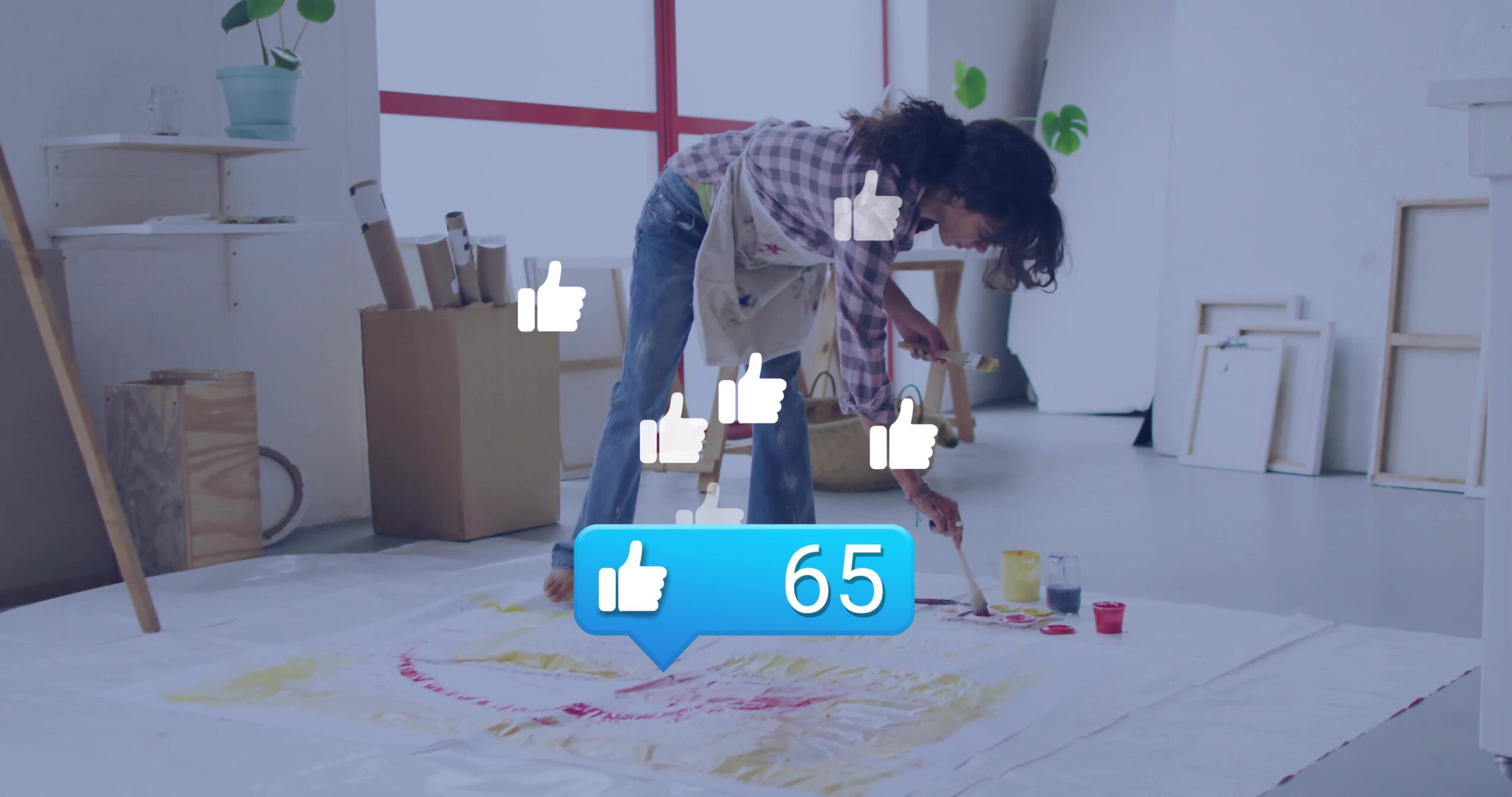
How To Promote Your Fine Art On Social Media While Maintaining Your Vision
Fine artists face a specific challenge on social media: how to promote their work without diluting its integrity. For painters, sculptors, printmakers, and multidisciplinary artists, visibility often feels at odds with intention. The pressure to “show up,” post frequently, and perform personality can clash with the quiet, interior nature of serious studio practice.
What follows is a practical, thoughtful approach to navigating that tension.
A Brief Orientation
Fine artists don’t struggle because they lack talent. They struggle because social platforms reward speed, spectacle, and self-promotion—while art often requires slowness, ambiguity, and restraint.
Here’s the essential idea:
- You do not have to become a content machine.
- You do need to offer context.
- Process and storytelling can deepen integrity rather than undermine it.
- The artwork must remain central—even when promotion is necessary.
The goal is not to “sell out.” The goal is to translate your intention into a format others can access.
The Core Tension: Visibility vs. Authenticity
Many artists experience social media as performative. The algorithms seem to favor:
- Personal oversharing
- Trend participation
- Simplified narratives
- Constant output
Yet serious artistic practice is rarely simple. It involves doubt, revision, research, and long stretches of invisible labor.
The mistake is assuming that promotion must equal performance.
It doesn’t.
Promotion becomes inauthentic when:
- You post things unrelated to your work just to stay visible.
- You distort your artistic intention to fit trends.
- You create work primarily for engagement metrics.
It becomes aligned when:
- You clarify your process.
- You articulate the questions behind the work.
- You invite viewers into your thinking—without theatrics.
Authenticity is not silence. It’s coherence.
What to Share (Without Losing Yourself)
You don’t need to reveal everything. You need to reveal meaning.
Consider sharing:
- Process moments (materials, underpaintings, sketches)
- Conceptual origins (what sparked the series?)
- Studio decisions (why this scale, this color, this form?)
- Artistic lineage (influences, references, research)
- Reflections after completion
This isn’t self-promotion. It’s interpretation.
When viewers understand your intention, they engage more deeply. The work doesn’t shrink; it expands.
A Practical Comparison
Below is a simple framework to help you evaluate whether your content feels performative or aligned:
| Performative Posting | Intentional Sharing |
| Posting daily with no reflection | Posting when you have something meaningful to say |
| Trend-driven visuals | Work-driven visuals |
| Centering your personality | Centering the artwork and its inquiry |
| Vague captions | Specific artistic context |
| Metrics as motivation | Inquiry as motivation |
The difference is subtle but powerful.
How to Structure Your Presence (A Gentle Checklist)
If you want a grounded way to approach social media, try this:
Before posting, ask:
- Does this relate directly to my artistic practice?
- Does it clarify something about the work?
- Does it feel aligned with my values?
- Would I be comfortable seeing this next to my artwork in a gallery?
- Is the artwork still the focal point?
If the answer is yes to most of these, you’re likely operating from integrity.
Making Your Work Easier to Understand Visually
Presenting artwork clearly online can reduce confusion and prevent distraction. Simple supporting visuals—like consistent post layouts, series previews, or concept sketches—help audiences follow your trajectory over time. Clean formatting and recurring visual structures make your body of work feel cohesive.
Some artists create minimal templates for announcements or series introductions. Others experiment with ways to turn text into images with Adobe Firefly to quickly generate simple concept visuals that support a post’s theme or layout idea. Used thoughtfully, tools like this can assist with presentation without overshadowing the artwork itself. The goal isn’t to embellish the art—it’s to frame it so viewers can enter it more easily.
Building Narrative Without Becoming Performative
Art thrives on context. Social media can become a space for micro-narratives.
Instead of:
“New piece. Available now.”
Try:
“This painting began with a question about how memory distorts landscape. I worked in thin washes for weeks before committing to these darker forms.”
This shift does three things:
- It invites the viewer into your inquiry.
- It honors the labor behind the work.
- It keeps the focus on the art.
You are not performing. You are translating.
Frequently Asked Questions
Do I have to show my face to build an audience?
No. Many artists build meaningful followings by focusing entirely on their work and voice. Visibility does not require personal exposure beyond your comfort level.
How often should I post?
Consistency matters more than frequency. Posting once or twice a week with depth is often more effective than daily superficial updates.
What if social media feels draining?
It’s valid to create boundaries. Batch content, schedule posts, or designate specific days for engagement. Protect your studio time first.
Is it wrong to think about sales?
No. Financial sustainability supports artistic longevity. The key is ensuring that sales strategies don’t dictate your creative direction.
A Resource for Thoughtful Creative Practice
If you’re looking for a grounded perspective on sustaining an artistic life, the book Art & Fear by David Bayles and Ted Orland is a widely respected resource. It explores the internal struggles artists face and offers insight into maintaining integrity while continuing to produce work.
A How-To: Share Process Without Oversharing
- Photograph 3–5 stages of a work.
- Choose one decision you made (color shift, composition change).
- Write 3–4 sentences explaining that decision.
- Post the stages in sequence.
- End with a question related to the work—not your popularity.
This keeps the conversation anchored to the art.
Social media does not have to erode artistic integrity. When used thoughtfully, it becomes an extension of your studio—another space where inquiry continues. Visibility and authenticity are not opposites; they are collaborators when handled with intention. Protect the work. Clarify the work. Let the art remain the center.
Photo via PikWizard
Warning: Undefined array key "preview" in /home3/mysketc2/public_html/wp-content/plugins/oxygen/component-framework/components/classes/comment-form.class.php on line 75
Warning: Undefined array key "preview" in /home3/mysketc2/public_html/wp-content/plugins/oxygen/component-framework/components/classes/comment-form.class.php on line 79